
Insight ·
When Entry-Level Jobs Disappear, What Happens to Future Leaders?
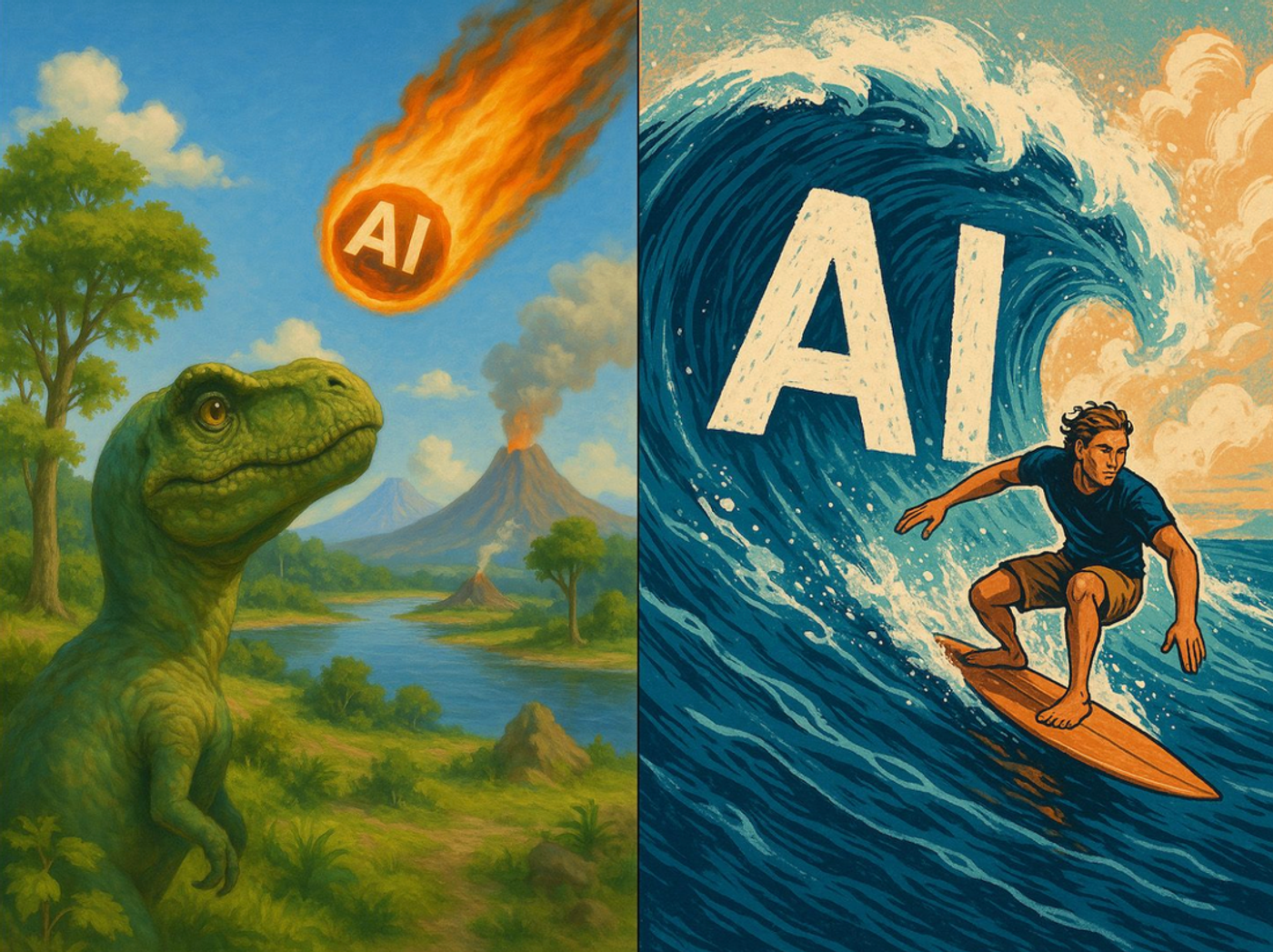
What happens when AI automates the very jobs your future leaders used to start in? How exactly are you preparing your people to succeed in that future?
The CEO of one of the world’s most advanced AI companies just dropped a bombshell — up to 50% of entry-level white-collar jobs could vanish within five years according to Dario Amodei, CEO of Anthropic. AI is wiping out the foundational work most careers (and talent pipelines) are built on.
For directors, this isn’t a future problem. It’s a governance imperative today.
- AI is reshaping work in sectors like tech, law, finance, and consulting.
- Graduate unemployment is rising, and software hiring is down by 50%.
Boards need to move beyond hype and cost-cutting narratives. Instead, we must ask:
- How will AI impact our workforce — today and tomorrow?
- Are we preparing our people with meaningful upskilling and role redesign?
- Are we chasing cost-out… or unlocking deeper productivity and innovation?
- What steps are we taking to address dislocation and fear?
The Institute of Directors in New Zealand reminds us: our duty is to safeguard people and performance. And the Māori whakatauki “He tangata, he tangata, he tangata” (It is the people, it is the people, it is the people) talks to the importance of human connection and relationships. This is what creates community and enables people to flourish.
As AI transforms work, the real leadership test is this: Will your organisation use AI to replace people, or elevate them?
Get in touch
Want Helen’s thinking in the room with your board?
If this sparked something, let’s talk. A short conversation is usually enough to know whether a workshop, keynote, or coaching engagement would be useful.